
Ready to get started?
Drop your details and we’ll be in touch with a next working-day quote.
Get Your Free Quote
Takes 60 seconds · No obligation
or call us directly
Learn how card machines work, from the moment a customer taps their card to payment authorisation and settlement. Understanding how transactions are processed can help businesses make informed decisions about payment technology and get the most from their payment solutions.
While some businesses still operate on a cash-only basis, offering customers the option to pay by card, smartphone or smartwatch has become increasingly important for businesses across the UK.
Card payment technology has evolved significantly in recent years. Modern card machines can process payments quickly, securely and almost anywhere, thanks to portable and mobile payment terminals that support flexible ways of working.
Whether you operate a retail shop, restaurant, salon, café or mobile business, card machines have become an essential part of the customer experience. Choosing the right payment solution can improve convenience for customers and help businesses operate more efficiently.
But what actually happens when a customer taps their card or enters their PIN?
Understanding how card payment machines work can help businesses better understand payment processing, troubleshooting and transaction management.
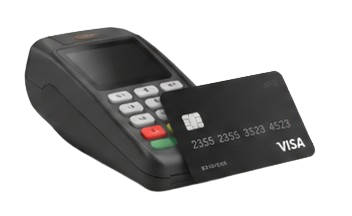
Starting with the basics, a card machine is a payment device that allows businesses to accept debit card, credit card and digital wallet payments for goods and services.
Even if you’ve never used one in your own business, you’ve almost certainly encountered them as a customer in supermarkets, cafés, restaurants, retail stores, taxis, market stalls and many other locations.
Card machines enable customers to make payments using:
These devices have become increasingly popular because they offer customers greater convenience and flexibility when making purchases.
Modern payment terminals are also capable of processing transactions quickly while maintaining high levels of security throughout the payment journey.
Card machines are available in several different formats, each designed to support different business environments and operational needs.
Countertop card machines are the traditional payment terminals most commonly found in supermarkets, convenience stores and fixed checkout locations.
These devices remain connected at a single payment point and are designed to stay in one location rather than being moved around the premises.
They are ideal for businesses with permanent tills or checkout stations.
Portable card machines provide greater flexibility by allowing staff to take payments throughout the premises.
These devices commonly connect to payment systems using Wi-Fi or Bluetooth technology and are particularly popular in hospitality environments such as restaurants, cafés and bars where customers prefer to pay at their table.
Portable terminals help improve customer convenience while reducing the need for staff to move between tables and fixed tills.
Mobile card machines offer the highest level of flexibility and are designed to accept payments virtually anywhere.
Using mobile data connections such as 4G or 5G, these devices can process payments without relying on fixed broadband or local networks.
They are particularly useful for:
For businesses operating away from fixed premises, mobile card readers provide a reliable and convenient payment solution.
Although paying by card may appear almost instantaneous, a number of processes take place behind the scenes in just a few seconds to ensure payments are completed securely and accurately.
Here’s what happens during a typical card transaction.
The payment journey begins when the transaction amount is entered into the card machine.
This may happen automatically through an integrated EPOS system or manually by a member of staff entering the amount directly into the terminal.
Once the amount has been confirmed, the customer chooses how they would like to pay.
This may involve:
Once the customer presents their payment method, communication begins between the card or digital wallet and the payment terminal.
For chip and PIN transactions, the card’s embedded microchip exchanges encrypted information with the card machine.
For contactless transactions, communication takes place using Near Field Communication (NFC) technology, which allows payment information to be transmitted securely over very short distances.
If a customer is paying with a smartphone or smartwatch, the process works in a similar way, with the digital wallet securely transmitting encrypted payment credentials to the card machine.
The payment terminal then securely encrypts the transaction information before forwarding it for processing.
Once the transaction information has been encrypted, it is sent through the payment network to the merchant account provider.
The merchant account provider communicates with the customer’s card issuer and their bank to verify several important checks, including:
This authorisation process usually takes only a few seconds.
If the bank approves the transaction, an authorisation response is sent back through the payment network to the card machine.
The payment terminal will then display confirmation that the transaction has been successful.
Depending on the setup, the terminal may also provide:
Once approved, the payment enters the settlement process and the funds are transferred to the merchant account according to the agreed payment schedule.
If the transaction cannot be authorised, the card machine will display a message explaining that the payment has been declined or cannot be processed.
This may occur for several reasons, including:
In these situations, businesses can ask customers to use an alternative payment method or contact their card provider for further assistance.
The card machine provides immediate feedback so businesses know straight away whether the transaction has been completed successfully.
Having a basic understanding of how card machines work can help businesses:
Although the process may appear simple from the customer’s perspective, multiple systems work together behind the scenes to ensure every transaction is secure, accurate and completed within seconds.
Modern businesses require payment solutions that are fast, secure and flexible enough to support changing customer expectations.
Tectah payment solutions are designed to support businesses of all sizes, whether operating from a fixed location, serving customers at tables or taking payments on the move.
By combining secure payment processing with flexible terminal options and seamless integrations, businesses can provide customers with convenient payment experiences while managing transactions efficiently and securely.
Ready to get started?
Drop your details and we’ll be in touch with a next working-day quote.
Get Your Free Quote
Takes 60 seconds · No obligation
Get your free quote in 60 seconds
Tell us a bit about your business and our experts will call you back within 1 hour.
We'll call you within 1 hour
100% free and no commitment
Find the right solution for you
Let’s get started
Fill in your details and we’ll be in touch soon.